Gvmeroq
Frame Guide
Frame Guide
Couldn't load pickup availability
-
Problem Statement
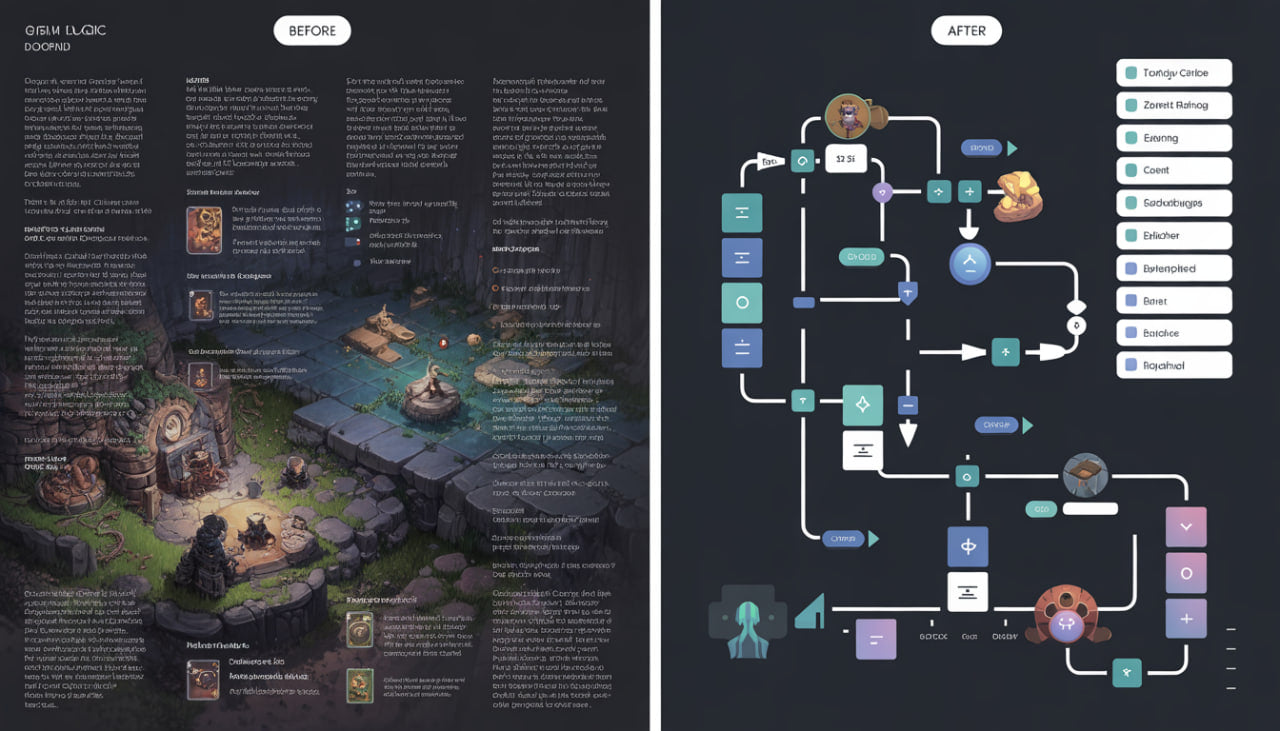
When creating game logic, many people face the fact that individual elements and rules exist without clear boundaries. This leads to systems becoming confusing and difficult to work with further. Often logic grows chaotically, without understandable frames between different parts of the mechanics. Without proper organization of frames, it is hard to maintain order when adding new elements. That is why it is important to have tools that help build logic in clear, organized structures from the very beginning. -
Solution
Frame Guide is designed to provide a practical approach to structuring game logic. It offers step-by-step modules that show how to create stable frames and outlines for different types of mechanics. Thanks to the clear system, you will be able to develop skills in organizing logic without unnecessary overload. The set serves as a reliable guide for those who want to organize their knowledge. It helps move from scattered elements to well-organized and scalable constructions while keeping clarity at every stage. -
What's Inside (detailed!)
Frame Guide consists of ten main modules, each devoted to a specific aspect of building logical frames. The first module introduces the concept of frames and their boundaries — you receive detailed explanations on how to define the main outlines in a game system, as well as 22 practical exercises on creating simple structural diagrams. The second module focuses on the basic components of a frame: it covers how to identify key blocks inside the frame, with examples of diagrams and test scenarios.
The third module is devoted to connections between frames: you step by step study how to combine several outlines into a single structure, with more than 40 examples of different types of interactions. The fourth module examines the hierarchy of frames — here you get textual materials and visual diagrams that show how to build levels of nesting for complex systems. The fifth module offers tasks on creating adaptive frames: you will be able to compose outlines that change easily depending on project needs.
The sixth module contains an overview of typical difficulties when working with frames and ways to solve them. The seventh module is a set of additional resources: templates for creating your own frames, checklists for checking structure and short summaries of key principles. The eighth module offers a series of exercises on combining frames with previously learned knowledge about flows and pulse. The ninth module is devoted to scaling frames: here you learn how to expand outlines without breaking integrity. The tenth module is a final comprehensive project where you combine all the studied elements into a single frame system for a full-fledged game mechanic.
Each module is accompanied by practical exercises of varying difficulty, from basic to advanced. In total, Frame Guide includes over 120 pages of structured materials, 42 interactive examples, 35 test tasks and 20 visual diagrams. Everything is presented in a clear sequence so that you can move step by step and immediately apply the knowledge in practice. The materials also contain recommendations on keeping notes, tracking progress in understanding structural connections and testing created frames in different scenarios. This makes the set a full-fledged practical tool for developing skills in creating orderly game systems.
-
Who is this for?
Frame Guide is intended for those who already have an intermediate understanding of game logic and want to master structured frames. It is suitable for enthusiasts, students of relevant fields and developers working on projects with complex mechanics. - What You'll Learn (Bullet points)
- Define boundaries and components of frames in game systems
- Create basic structural blocks inside logical outlines
- Combine several frames into unified organized constructions
- Build hierarchy of frames for complex mechanics
- Develop adaptive outlines that change easily
- Identify and correct problems in frame structure
- Work with templates for visualization and scaling
- Optimize frames for more efficient logic organization
- Check the integrity and order of created structures
-
Support and familiarization policy
Our materials are designed to help you study the topic comfortably. We offer a 30-day period for detailed familiarization with Frame Guide. If for some reason the set does not meet your expectations, you can contact us to discuss further steps.
Self-paced learning overview
- 📥 Digital file available after purchase
- ♾️ Long-term availability
- 🔒 Secure checkout
- 📅 Content updated in 2026
In what format are the materials presented?
In what format are the materials presented?
The materials consist of structured modules that include clear explanations, practical tasks and examples. This allows you to study game logic step by step and comfortably.
Are the materials suitable for different levels of preparation?
Are the materials suitable for different levels of preparation?
Yes, the modules are designed to be useful both for those who are just starting and for those who already have some experience. Everyone can move at their own pace.
How is the learning process organized?
How is the learning process organized?
Learning is built step by step — from basic concepts to more complex elements. This helps gradually develop understanding of game logic.
Share